
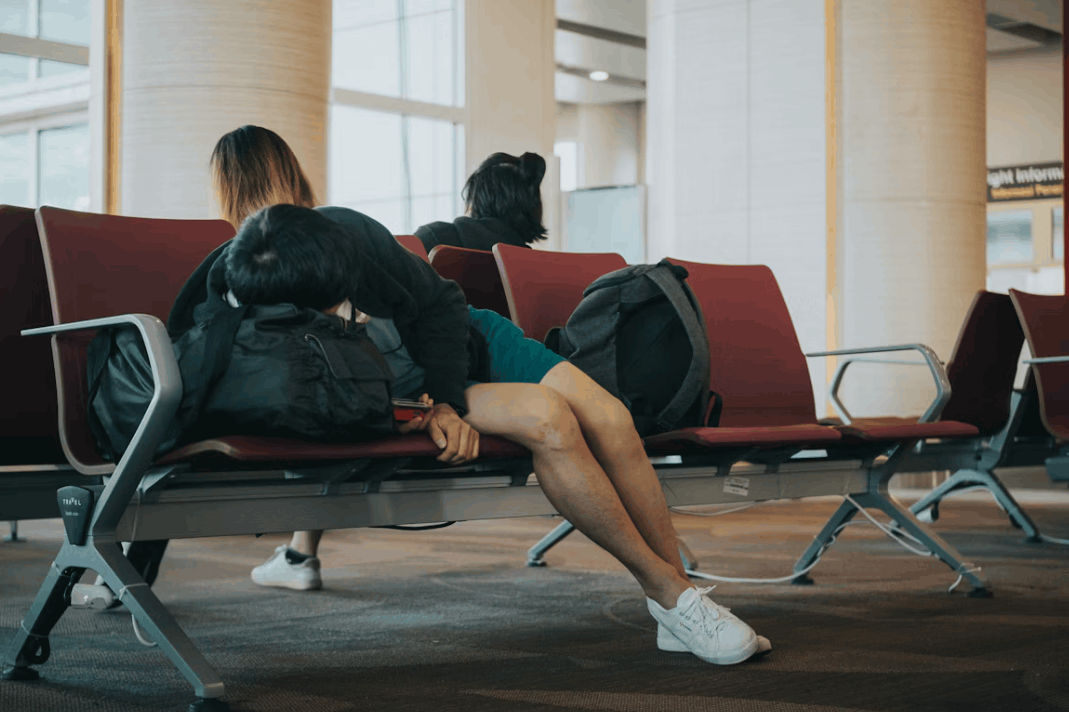
You step off a 24-hour trip into bright afternoon sun and your body is certain it’s 3am. Fast forward nine hours. It’s 2am in a hotel room, you’re wide awake, and you’ve watched half a season of something you didn’t even like.
Jet lag feels like the tax you pay for going anywhere interesting. You can’t fully avoid it on a long-haul trip. But you can shorten it, sometimes by days, and nearly everything that helps is free.
What’s actually going on
The CDC Yellow Book, which is basically the US Centers for Disease Control and Prevention’s bible for travel health, calls jet lag a sleep disorder. You’ve crossed time zones faster than your internal clock can keep up, so your body is still running on home time while the rest of the world has moved on.
It isn’t only tiredness. Broken sleep, foggy thinking, dozing off at lunch, feeling a bit off in general and a grumpy stomach can all be part of it. It’s really common, too. The Yellow Book cites research where 68% of international business travellers said they regularly had symptoms.
How long does it drag on? According to the Sleep Foundation, anything from a few days to a few weeks. Distance and direction both matter.
Why flying east is harder
Ever noticed the trip home wrecks you more than the trip out? You’re not imagining it.
Most people’s natural body clock runs a touch longer than 24 hours. So it’s easier to stretch the day, which is what flying west asks of you, than to shorten it, which is what flying east demands. The Yellow Book says people adjust by around 1.5 hours a day after heading west. Heading east, it’s closer to an hour a day.
For Aussies this is very familiar. Flying to Europe, you’re travelling west and the first few days are usually okay. Coming home you’re flying east, which is why so many people spend their first week back fading at 3pm and staring at the ceiling at midnight.
Daylight is the best tool you’ve got
Your body clock takes its biggest cue from light. Get the timing right and it speeds things up. Get it wrong and you can actually slow yourself down.
The Yellow Book’s rule of thumb goes like this. After flying east, go looking for bright morning light, because that pulls your clock earlier. After flying west, avoid bright light first thing in the morning and soak up the evening instead, which pushes your clock later.
So after an eastbound flight, that might be a long walk outside after breakfast. Westbound, sunglasses on the morning tram and a wander before dinner. Get outdoors if you can. Even an overcast day is much brighter than a hotel room or a shopping centre.
A head start before you go
If your schedule lets you, start shifting a few days out. The Yellow Book suggests moving your sleep about an hour a day for two or three days before you fly. Earlier to bed if you’re heading east, later if you’re heading west.
Will that fix a ten-hour time difference? No. But turning up with two or three hours already sorted takes a real edge off those first days.
Quick trip of less than two days? The Yellow Book’s advice is to mostly stay on home time and not bother adjusting.
On the flight
Easy on the free wine. I know. The Yellow Book notes that alcohol reduces sleep quality and dehydrates you, and neither is what you want before landing somewhere new.
Drink plenty of water, before and during and after. Cabin air is very dry, and the Sleep Foundation specifically recommends keeping your fluids up.
And think about when you have your coffee. Caffeine has a half-life of roughly five hours, so a flat white at 4pm is still doing plenty at 9pm. Use it to stay awake when you need to. Then stop well before you want to sleep.
Once you land
This is the hard part. Switch to local time immediately. Eat when the locals eat, go to bed when they do, even though you’ll be dead on your feet at 4 in the afternoon.
If you genuinely can’t stay awake, nap, but keep it short. The Sleep Foundation says under 30 minutes, and at least eight hours before bedtime. Set an alarm! The “I’ll just lie down for a minute” nap on day one is how people lose an entire evening and then lie awake until sunrise.
Go lighter on food for the first day or two as well. Your gut is just as confused as the rest of you.
Does melatonin help?
It can. There’s decent evidence melatonin helps shift the body clock when it’s taken at the right time. The Yellow Book notes low doses of 0.5 to 1 mg work for that, and advises against going above 5 mg. The timing matters more than how much you take, and it changes depending on your direction of travel.
Before you go buying some, though. In Australia melatonin generally needs a prescription. Healthdirect says only people over 55 can get a slow-release version over the counter. It can interact with other medications, and the Sleep Foundation warns against taking it for the very first time mid-flight. Have a chat with your GP or pharmacist before the trip.
Be realistic
You’re not going to feel amazing on day one after crossing ten time zones. Nobody does. The goal is just to feel normal again a few days sooner.
Daylight at the right time. Local hours from the moment you land. Short naps, not long ones. Go easy on the booze. No app or gadget beats that combination, and it won’t cost you a cent.
This article is general information only and isn’t a substitute for medical advice.




Leave a Reply